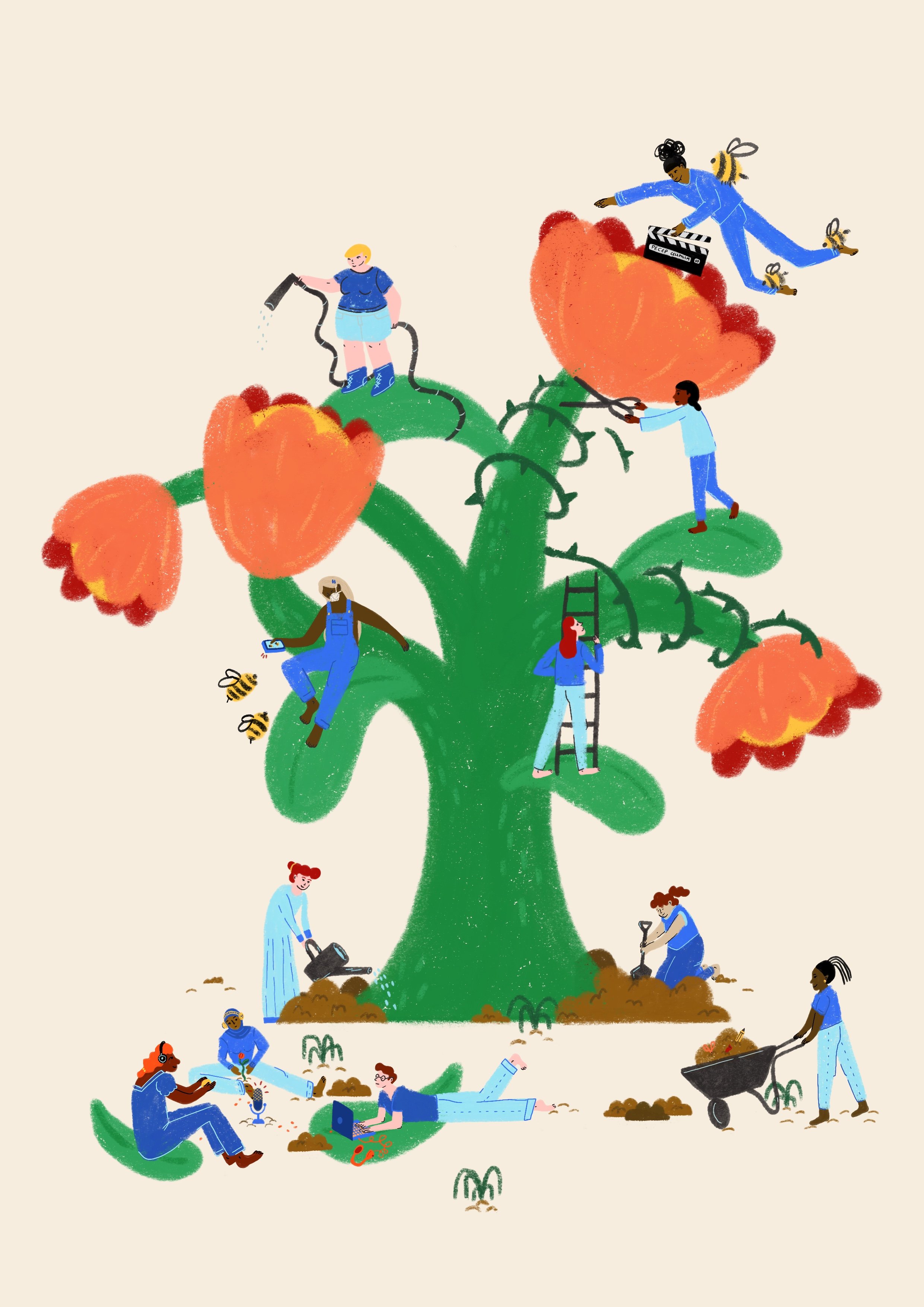
Illustration of people gardening and caring for a large flowering plant that resembles a tree, with individuals watering, pruning, planting, and taking photos.

We explore, generate, and share knowledge about facilitation practices that support community-engaged work across different sectors.
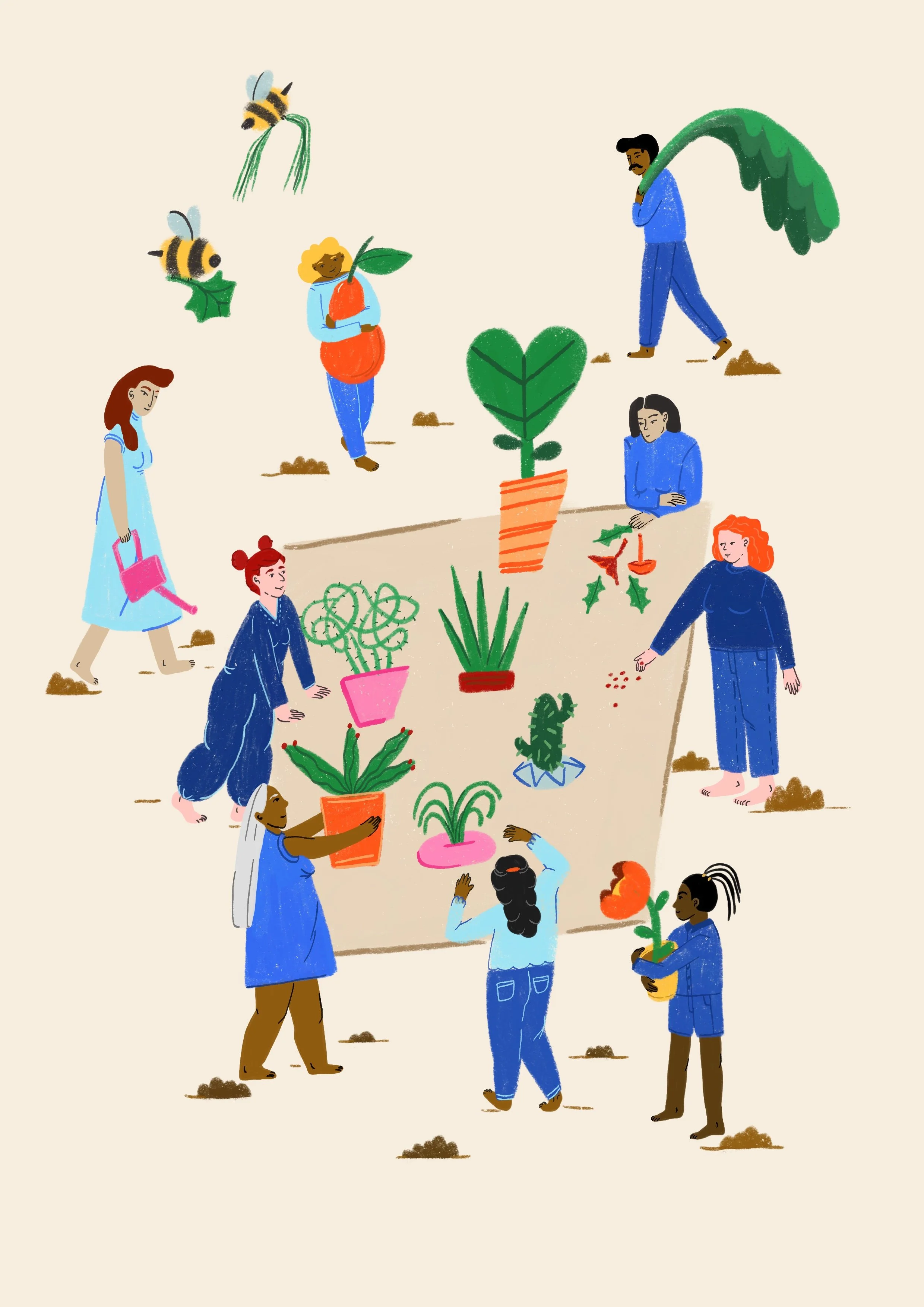
People planting and caring for various indoor and outdoor potted plants, with some watering, arranging, or examining the plants, in a gardening scene.

The Pedagogies of Community-Engagement Collective (PeCEC) is a community-based research project created to explore, generate, and share knowledge about facilitation practices that support community-engaged work across different sectors. Our project was inspired by a deep desire to explore and share knowledge about facilitation practices that support community-engaged work as a way to advance social justice.

About the Project
Drawing of a smiling person with short hair, wearing a checkered shirt, done in pink crayon.
Orange checkered cloth.
Outline of the state of Tennessee with green and dark green diagonal stripes.
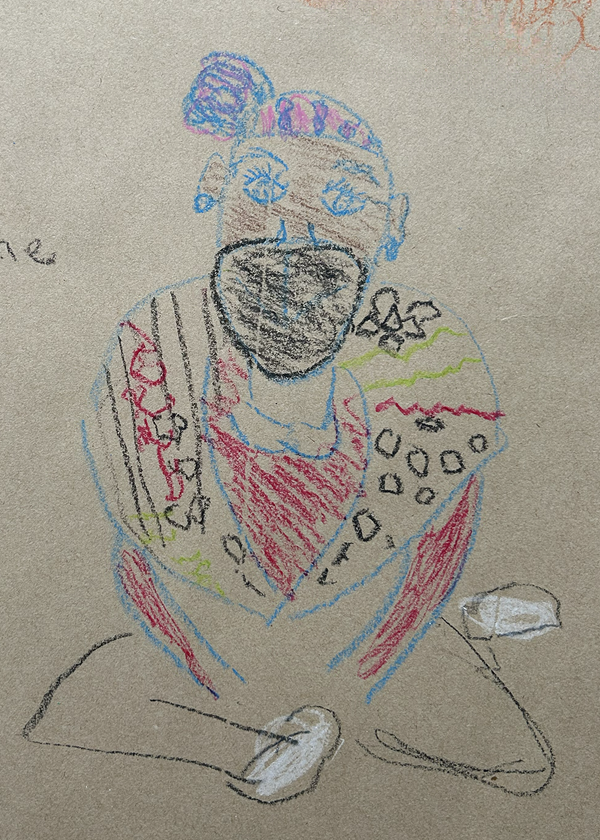
Colorful crayon drawing of a person with a bun, wearing a mask and a decorated shirt, sitting cross-legged.
Close-up of a red chili pepper with textured surface and curved shape.
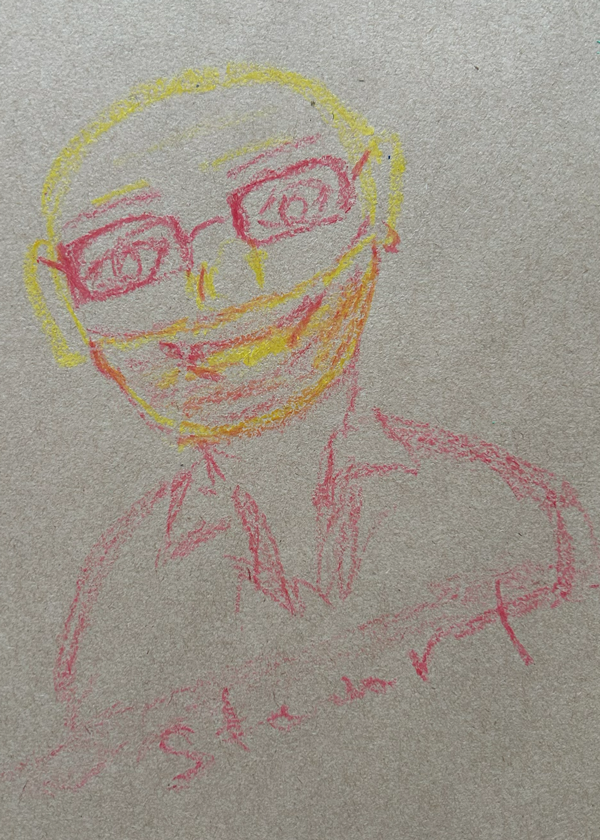
A childlike drawing of a person with glasses, smiling, and wearing a collared shirt, on textured paper.
Close-up of a piece of blue-patterned duct tape with blue spots on a light blue background.
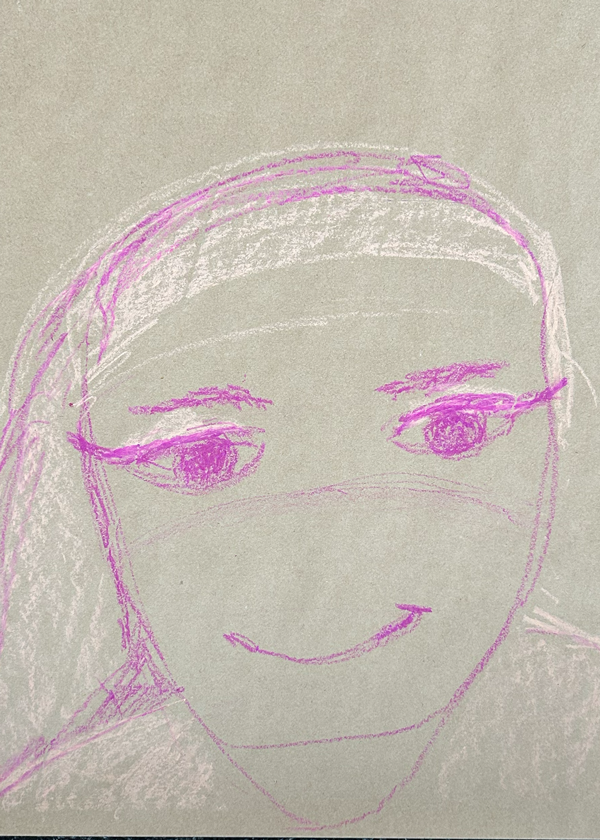
A child's chalk drawing on a textured gray surface depicting a smiling face with large eyes and long eyelashes, with hair and facial features outlined in purple and white chalk.

Our unique partnership brings together community-based non-profit organizations, academic researchers, and independent community-engaged facilitators united around a common desire to think deeply about, and build community around facilitation and social change.
The Collective
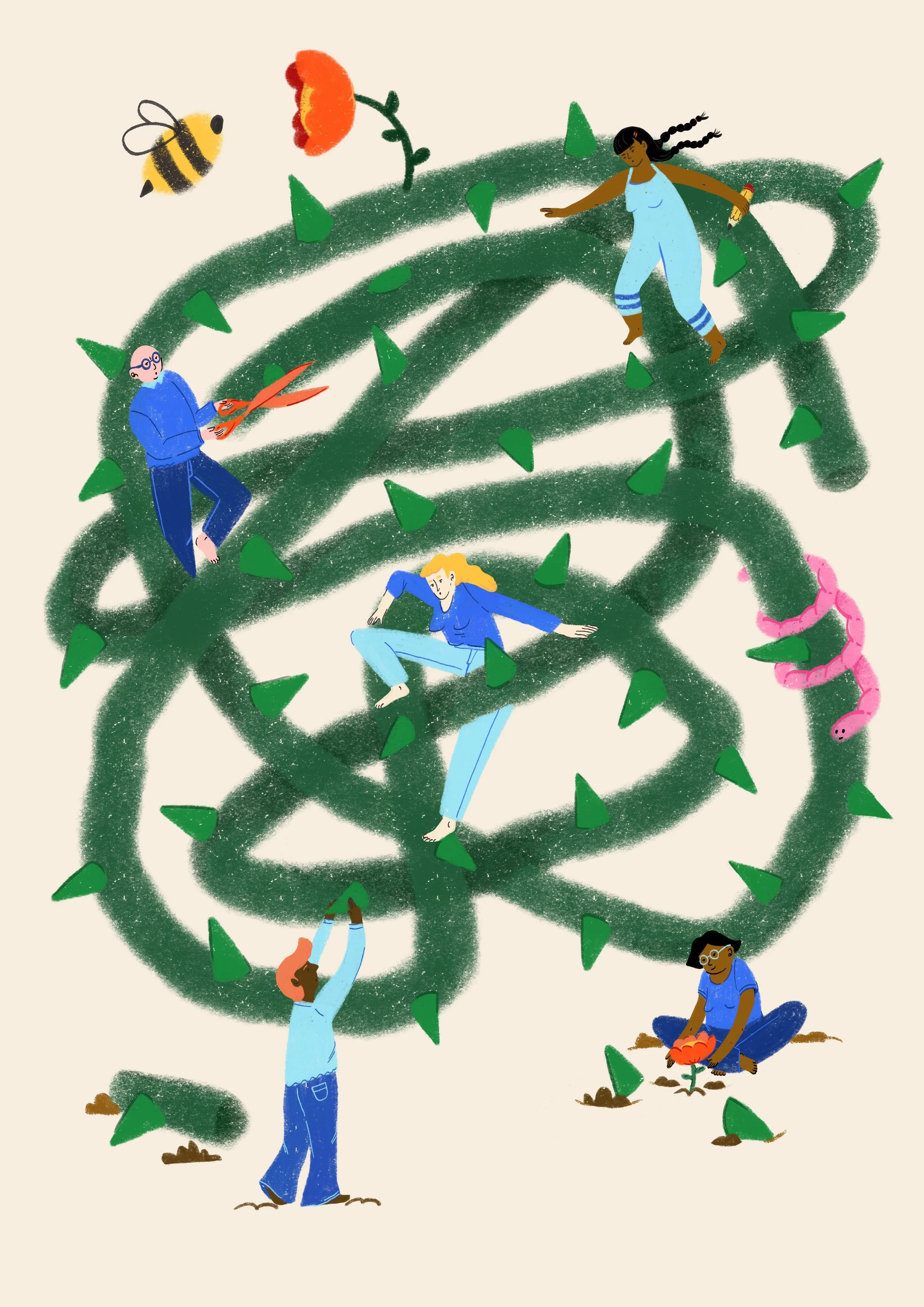
Illustration of people climbing, sitting, and gardening on a large green spiral structure with spikes, surrounded by bees, a caterpillar, a flower, and other plants.

Has someone asked you to facilitate? Not sure if you should say yes or no?

How do facilitators manage those moments when things fall apart and what can we learn from?

What ingredients make a community-engaged facilitator?

Explore All Resources
  • “Building relationships with all of the incredible people involved in this project has been completely transformative. Over the past three years, it has been such a gift to have learned from so many brilliant colleagues and to work together to cultivate processes that are thoughtfully and intentionally grounded in values of care, justice, and equity.”

    Ally Crockford

  • “These three years, I have learned how facilitation is about intentional intimacy, which requires attentiveness to discomfort and a disposition to embrace it with care.”

    Andrea Vela-Alarcón

  • “Critical conversation and observation bring us together and connect us to a wider thread of understanding. The beauty of having creative and academics in dialogue is that we illuminate nuance, bring the unseen to the forefront, and build thoughtful spaces for understanding and collaboration.”

    Angie Aranda

  • “I have experienced such deep care and curiosity through my work on the data analysis, retreat planning, and report writing teams for this project – a project that is so collaborative in its intention and processes. Learning from what others have shared about their facilitation journeys has helped me take stock of my own experiences and reflect, with immense gratitude, the communities I have engaged with and learned so much from.”

    Annie Chau

  • “The most memorable part of the project for me was the in-person retreat in April 2025. This was my proper introduction to the project team members as someone who joined a little later on. I was met with so much warmth and left the retreat so filled, being able to immerse myself in a variety of arts-based and anti-racist/anti-oppressive considerations when thinking about facilitation. Thank you for this opportunity!”

    Asli Mahdi

  • “This project has made me think deeply about expectations and repair in community-engaged research, especially through the example of building collaborative relationships with other community-engaged facilitators that are grounded in reciprocity and care. Moments of repair and non-disposability were especially powerful when folks had different visions—choosing to mend relationships, and foreground curiosity about difference, rather than move on when challenges arose.”

    Casey Burkholder

  • “One of the most memorable moments of this project was hearing someone speak about realities and nuances of frontline facilitation that I’ve experienced but never found a way to voice. It felt like a moment of recognition around the complexities of this work, and the level of inner awareness and outer consciousness it requires of the facilitator themself.”

    Erin Howley

  • “She works hard for the money!”

    Francisco Ibáñez-Carrasco

  • “The most memorable part of this project was the people I worked with - diverse in background and perspective, yet united in their commitment to community engagement. Collaborating and exchanging ideas with them deepened my understanding of community-engaged facilitation.”

    Hani Sadati

  • “The PeCEP project has been one of the most rewarding and challenging projects in my academic career. In this true “participatory” adventure, I am continually learning from and inspired by the wisdom of my fellow community-engage facilitators. At every turn, we encounter each other with generosity, candor, humility, and care, while holding each other accountable and being open to the shifts in practice that our work inspires.”

    Rubén Gaztambide-Fernández

  • “Finding supportive spaces to think deeply about facilitation, from an equity-informed frame is rare. Learning from others –including our team and a wider network of community-engaged facilitators has been an incredible experience. Together, we reconceived what collaboration looks like in practice. Our collaboration has stretched me, challenged me, lifted me up, soothed me, bolstered me, and enhanced my facilitation practice ten-fold”

    Sarah Switzer

  • “It has been inspiring to meet and work with so many incredible community facilitators who work across and with such a diversity of contexts and communities. Collectively sharing knowledge and experience around how and why we facilitate the way we do has encouraged me to think more intentionally about my own facilitation practices in ways that I am so appreciative for.”

    Sherry Ostapovitch

  • “This project gave me access to a community of facilitators. Facilitators who were thinking through similar problems, who demonstrated an intentional commitment to similar values and who cared deeply about the communities they work alongside”

    Susanne Nyaga

  • “The incredible generosity, care and brilliance of the people involved in this project, from community, health, Indigenous, art and academic spaces has been an inspiration. I have learned from many and am grateful.”

    Stuart Poyntz

  • "The most memorable aspect of this project for me is the connection to diverse facilitators doing amazing heart led work. As a community engaged facilitator travelling northern Manitoba my work often feels very isolated so knowing there are many wonderful people strongly engaged in anti-oppressive facilitation who want to create resources, connect, build skills and share knowledge is a tremendous blessing as I continue to strengthen my life work."

    Vanessa Anakwudwabisayquay Cook

  • “This research project demonstrated for me what community-engaged facilitation that is values-driven, justice-oriented, and rooted in reflexive praxis can be when intentions are matched with corresponding concrete actions.”

    Wendy Ng

Logo of the University of Toronto, Ontario Institute for Studies in Education, featuring a crest with a tree and shield, and text emphasizing the university and education studies.

Community Partners

Logo for SFU CERi Community-Engaged Research with red square background and black and white text.
Logo for 'Righting Relations' showing three interconnected stylized figures in red, orange, and yellow, with the text 'Righting Relations' beside them.
Logo of Women HIV/AIDS Initiative with bold purple, orange, and red letters spelling WHEA
Black silhouette of a yawning cat with tracing of a fishbone in shape of a fish.
Logo of the Centre for Community Based Research with an orange puzzle piece design and gray text.