Our partnership and project was born out of a shared desire and commitment to build a community around facilitation, as a way to advance social justice.
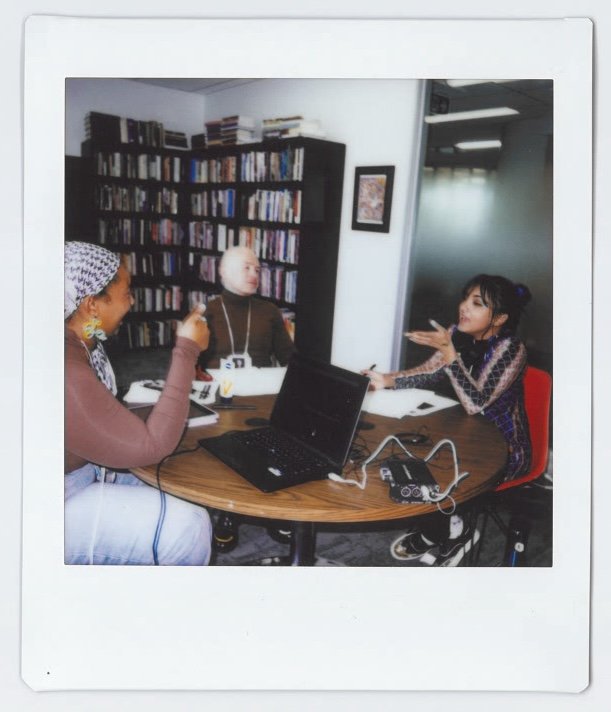
This project, funded in part by a Research Practice Partnership Grant from the Spencer Foundation, brings together skilled community facilitators and organizations working in community arts, HIV and harm reduction, adult education, youth engagement and activism, anti-racist social movements, Indigenous Sovereignty, community organizing, community-based or engaged research, and more.
Current and former organizational partners on this project include Righting Relations, Neighbourhood Arts Network, Women and HIV/AIDS Initiative, Community Engaged Research Initiative at Simon Fraser University, and Sketch Working Arts/Flip Foundation. The grant is held at the University of Toronto, and it is Co-Directed by Rubén A. Gaztambide-Fernández, from the Ontario Institute for Studies in Education, and Sarah Switzer, from the Centre for Community Based Research. In everything we do, we strive to adopt a non-hierarchical collaborative approach to leadership.
Through a collaborative approach, we co-designed our research together, as guided by the following questions:
How do our commitments and values shape our facilitation practice? How is our facilitation practice accountable? And to whom is our facilitation practice accountable?
Why do we facilitate the way we do? How do we make visible these facilitation practices?
How does our facilitation approach change depending on who we’re working with and for? How do we build relationships across and within difference(s)?
How does our lived experience and positionality inform and shape our facilitation practice? And how does our facilitation practice shape our lived experience?
Project Timeline
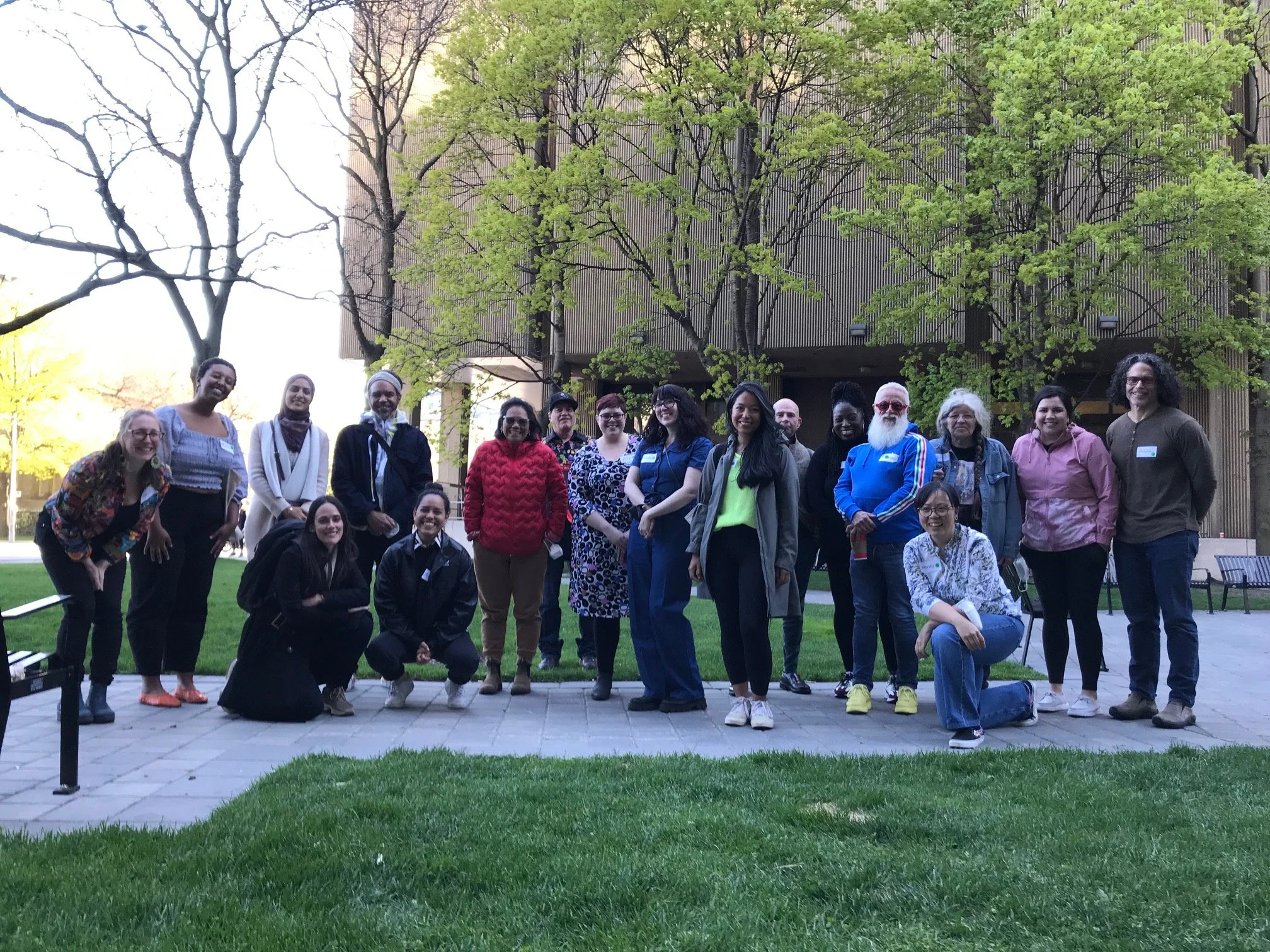
Year 1
Co-designing the Project: In year one, we took time to learn and grow together, as we collaboratively designed our research. We refined our guiding research questions, developed our methods (i.e., how we would answer these questions together), and explored with whom and how we would share these learnings.
Year 2
Sharing our Stories: To explore our questions, we hosted interviews with our team members and focus groups with our larger networks. We conducted 21 online interviews amongst our team members and 5 focus groups within our networks, reaching 31 community-engaged facilitators. Each focus group was hosted by an organizational partner working in a different sector.
We carefully and collaboratively analyzed the findings. An analysis working group composed of 8 team members (all community-engaged facilitators) carefully synthesized and reviewed interview and focus group data. We met often to discuss what we were learning, within our working group, and with the larger team.
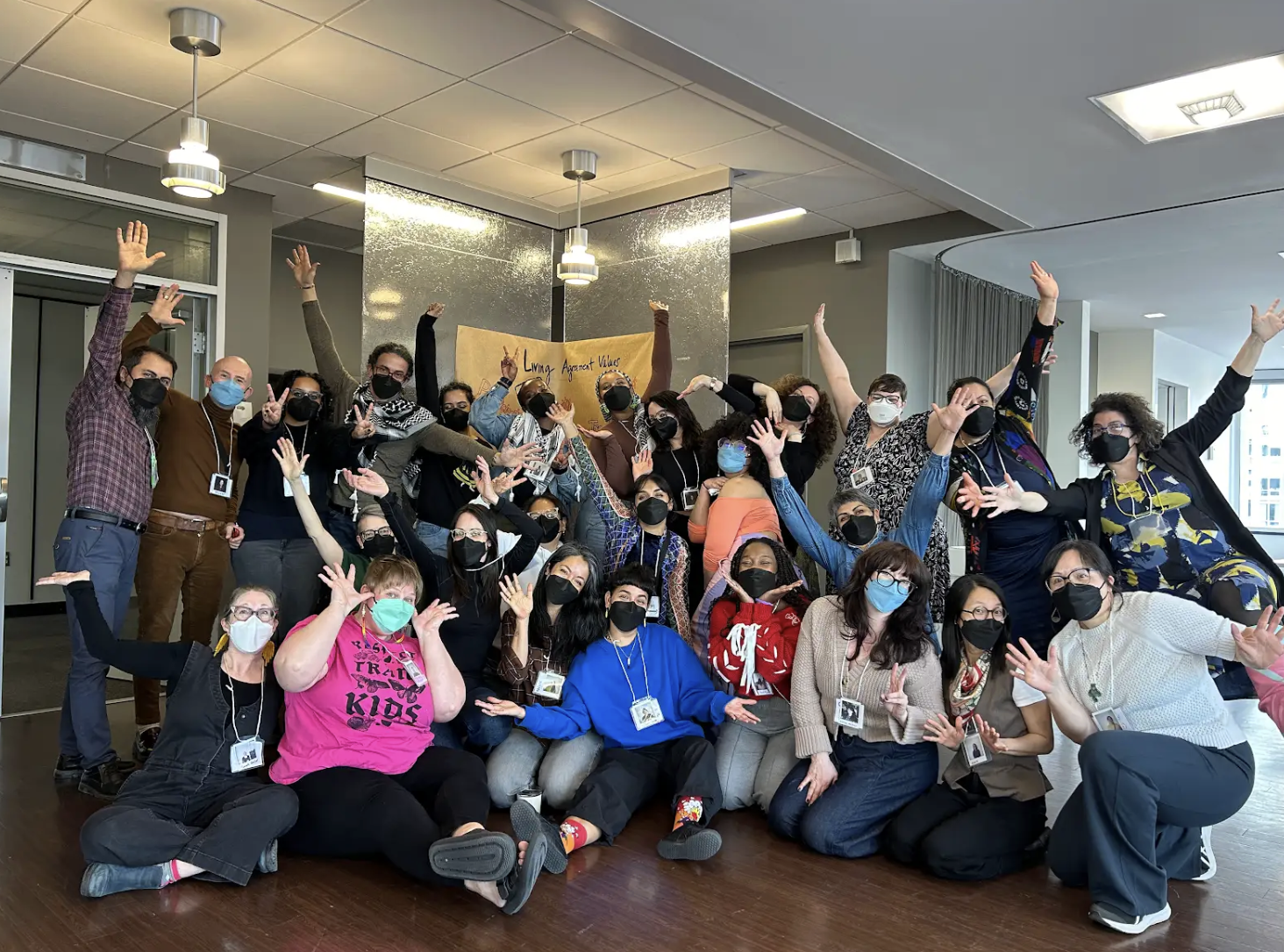
Year 3
Exploring and Expanding: To deepen our understanding of what we were learning together, twenty-six facilitators – team members and select focus group participants – came together over a 3-day in-person retreat to deepen our analysis and collaboratively develop resources for other community-engaged facilitators. We developed the resources showcased on this website, such as cellphilms (short videos made on a phone), collages, zines, and podcasts. After the retreat, we planted seeds for how and where our work might grow.
Living Agreement
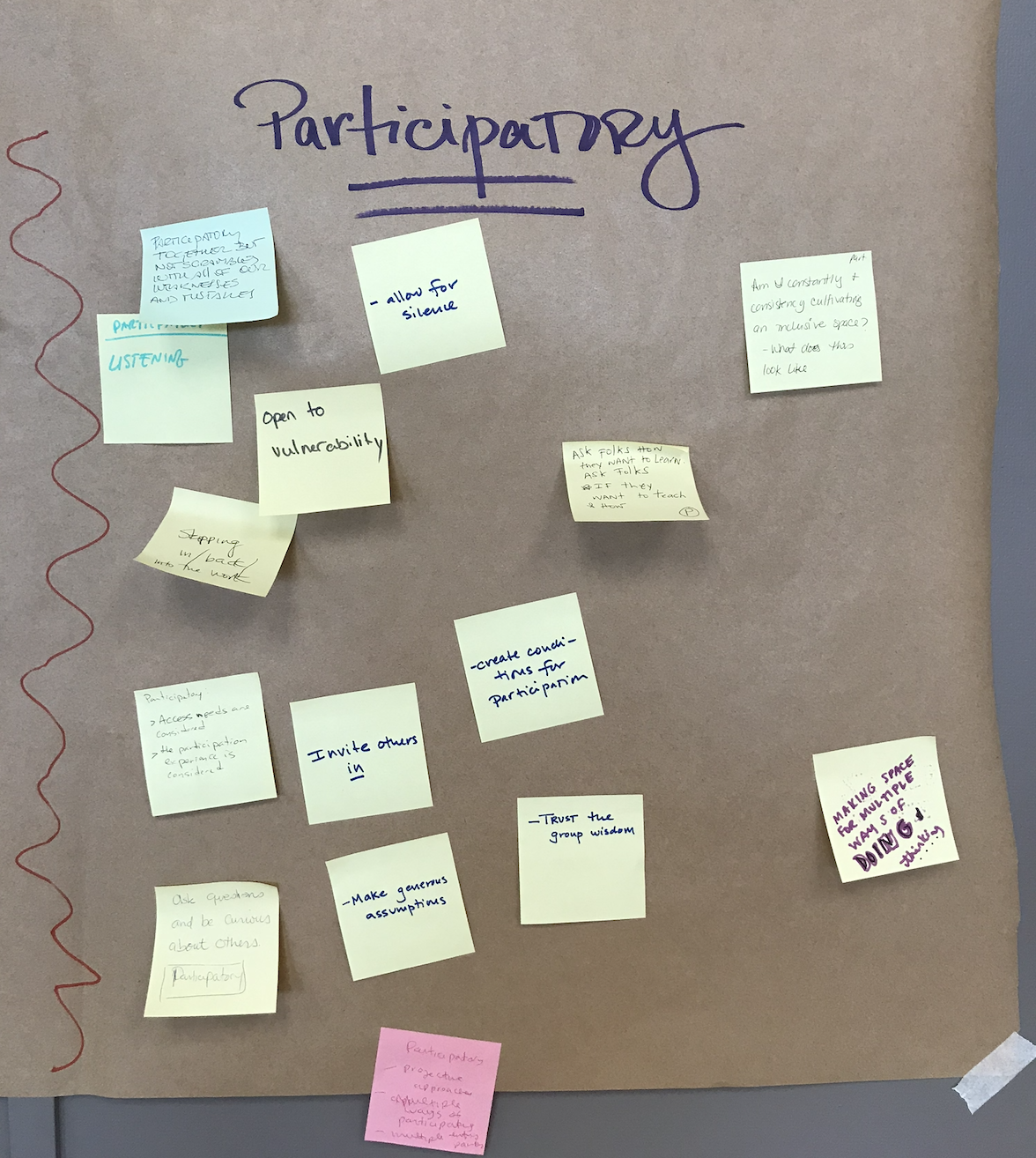
In this project, how we worked and walked together was as important as the outcomes we achieved. Our entire team was involved in research design, data collection, analysis and knowledge sharing. During year 1, over many conversations, we collectively crafted a living agreement that outlined how we would work together, premised on the principles of generosity, intentionality, participation, anti-racist and decolonial practice, and transparency. We revisited this agreement often.