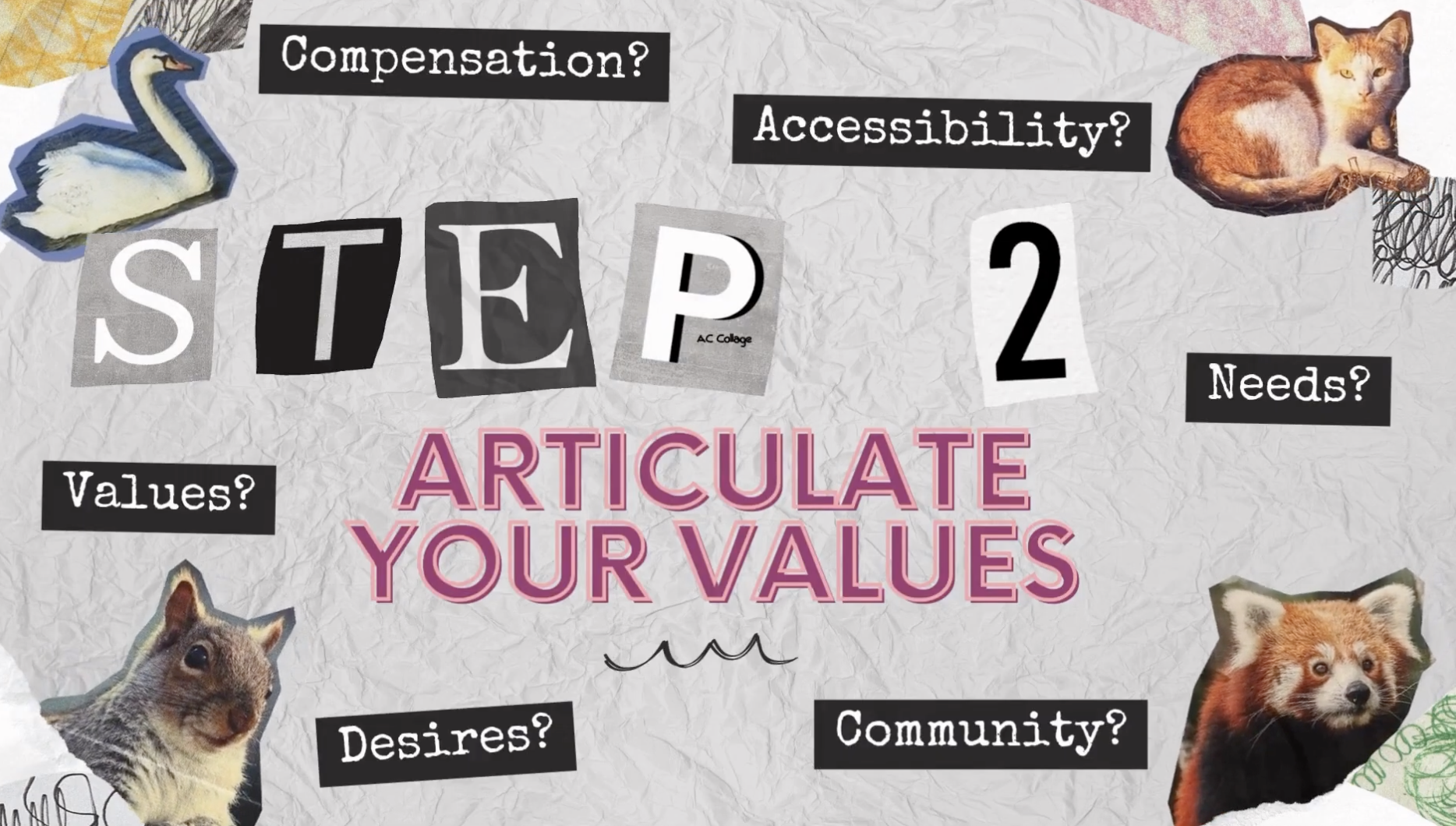
Has someone asked you to facilitate? Not sure if you should say yes or no? Looking for guidance with a little razzle dazzle? You might need: the facilitation validation imagination machine.
Project Title
Facilitation Validation Imagination Machine
kamilah apong, Angie Aranda, Casey Burkholder, Erin Howley, Erica McNabb, Sarah Switzer, Andrea Vela-Alarcón with the Pedagogies of Community Engagement Collective
Authors
This cellphilm (cellphone + film making in response to a prompt) offers a way for community-engaged facilitators to check in with themselves about their facilitation practices, values, and goals. It invites various questions such as:
Do I feel respected?
Who does this really serve?
What is my dream gig?
Am I the best person for this job?
Who else could do this job?
Do I have capacity?
This cellphilm can be used for personal reflection, training purposes, or team discussion.
Description
Paper Fortune Teller folding instructions: https://www.wikihow.com/Fold-a-Fortune-Teller
Additional Resources
This cellphilm positions facilitation not just as a skill but as a reflective, values-driven practice. By raising questions like “Do I feel respected?” and “Am I the best person for this job?”, it highlights the importance of facilitators pausing to assess their own experiences, positionalities, and emotional well-being. This can help ensure that facilitation work aligns with personal values and boundaries rather than simply responding to external demands.
Questions like “Who does this really serve?” push facilitators to think critically about power, representation, and impact. The cellphilm likely encourages them to consider whether their work genuinely benefits the communities involved or inadvertently centres institutional or personal agendas. This takeaway aligns with broader principles of ethical, community-engaged scholarship and practice.
The question “What is my dream gig?” invites facilitators to imagine work that sustains them emotionally, financially, and ethically. This suggests a takeaway around resisting burnout and exploitation in community-engaged work by advocating for roles that nurture facilitators as much as the communities they serve.
Asking “Am I the best person for this job?” points to the idea that facilitators must continually examine their positionality—how their identities, experiences, and expertise shape their suitability for certain roles. This takeaway underscores humility and the willingness to step back if someone else is better positioned to do the work.
Using a cellphilm as the medium itself models participatory, arts-based methods. A key takeaway might be that creative tools can open up new ways for facilitators to reflect, share, and dialogue about their practices—especially around complex or personal topics.