Our Study
Community-Engagement in COVID-19: Exploring online and remote pedagogies amongst practitioners
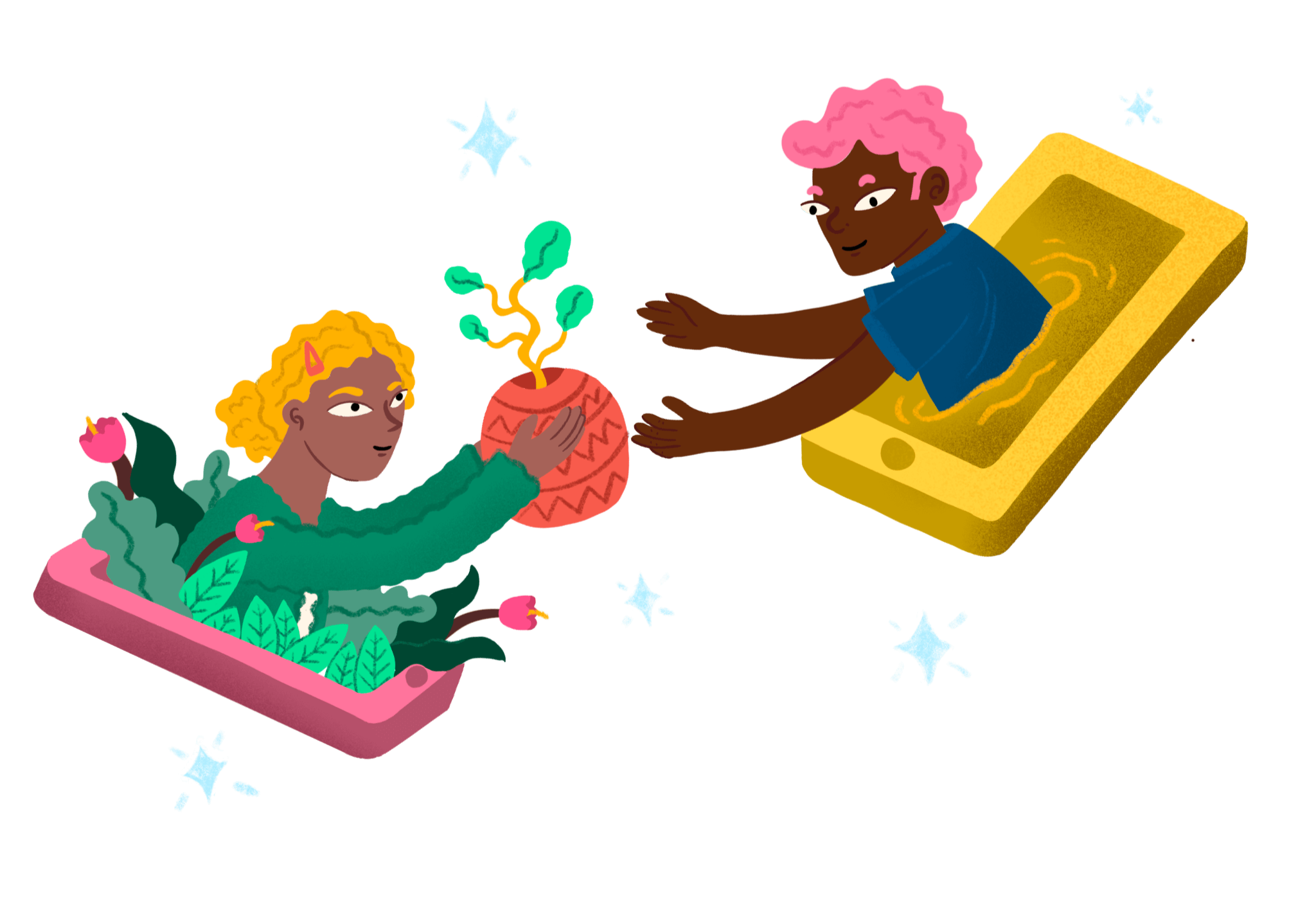
Early on during the COVID-19 pandemic, many facilitators struggled with how to build, maintain or sustain pre-existing relationships, partnerships or community-engaged projects in ethical ways. Since we were not able to gather in-person, many community-engaged workshops, projects, and meetings moved online, or to phone or messaging apps. Other projects adapted to mail or drop-off delivery.
As practitioners, we were encountering unique ethical and pedagogical challenges in adapting our work online, or to remote settings. There were also limited resources to guide this process. While secondary or post-secondary institutions developed online learning resources, these settings were guided by different goals, aims and institutional contexts. Similarly, at the time, research ethics boards were not attuned to the unique issues of participatory research, and the challenges of undertaking and sustaining this work during the COVID-19 pandemic.
At the same time, we were impressed by the resourcefulness of many community-engaged practitioners who were working alongside communities to develop new ways of maintaining connections during a challenging time, marked by multiple pandemics and heightened inequities.
We reached out to our networks. Our team was made up of community artists, participatory researchers, participatory visual methods practitioners, and those working in community facilitation fields. We invited 31 facilitators across Canada into dialogue. Together, over the fall and early winter of 2021, we hosted a series of focus groups. We discussed the ethical commitments guiding our work, the opportunities and tensions of adapting participatory, community-based approaches online, and the unique ethical issues or "lived tensions" which arise during online facilitation. We also hosted public events to bring students, community-engaged practitioners, and faculty into dialogue so we could extend the conversation.
This website shares what we learned, and provides some useful resources for community-engaged practitioners, initiatives or organizations who are learning how to adapt participatory initiatives, programs, or workshops online.
The Team
Many individuals contributed their time, insight, and energy to supporting this
Sarah Switzer, Lead Researcher, Ontario Institute for Studies in Education, University of Toronto
Andrea Vela Alarcón, Lead Illustrator and Graduate Assistant, Ontario Institute for Studies in Education, University of Toronto
Naima Raza, Graduate Assistant, Ontario Institute for Studies in Education, University of Toronto
Rubén Gaztambide-Fernández, Co-lead Researcher, Ontario Institute for Studies in Education, University of Toronto
Collaborators:
Angie Aranda, Neighbourhood Arts Network
Eva Hellreich, Neighbourhood Arts Network
Casey Burkholder, Education, University of New Brunswick
Heather Hermant, Centre for Community Partnerships, University of Toronto
Erin Howley, Independent Community-Engaged Practitioner
Francisco Ibáñez-Carrasco, Dalla School of Public Health, University of Toronto
June Larkin, Women and Gender Studies, University of Toronto
Partners:
Youth Research Lab, Ontario Institute for Studies in Education
Neighbourhood Arts Network
Centre for Community Partnerships, University of Toronto
Gendering Adolescent AIDS Prevention, New College, University of Toronto
Community-Engaged Practitioners:
Thank you to the many community-engaged practitioners who shared their time and insight in various ways. In our study, participants told us how they wanted to be credited for their involvement in the study. Many provided pseudonyms.
The following individuals provided support with event organization, resource development, or shared valuable insights that led to the creation of this resource:
Kate Klein, Craig Boucher, Dee, Jessica Bleuer, Z., Nadia O’Brien, Kellum Jaymes, Carol Strike, Sam Tecle Shira Taylor, Lori Chambers, Monica Anne Batac, Adam Barrett., C. Lurch, karen darricades, G., Naomi Tessler Mindy Stricke, Vibhuti Kacholia, Victoria Mata, Khari McClelland, Ananya Tina Banerjee, Casey Burkholder
Jen Thompson, Katie MacEntee, Lori Kufner, Y., Francisco Ibañez-Carrasco, and FIFIO.
Website support:
Hisayo Horie